
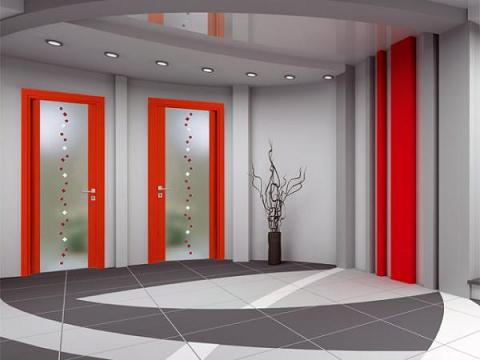
Glass is now an essential material in modern buildings, offering both functional and aesthetic value. Architects maximize its advantages beyond natural lighting—using glass in doors, partitions, facades, roofs, floors, furniture, and decorative features.
Classification by Purpose
- Daylighting Glass – Maximizes natural light.
- Insulated & Acoustic Glass – Combines soundproofing and thermal control.
- Decorative Glass – Colored, painted, or artistic panels for design.
- Furniture Glass – Used for tables, cabinets, and interior details.
Classification by Technology
- Standard Glass – Basic type for general use.
- Laminated Safety Glass – Two sheets bonded with a clear interlayer; remains intact when broken.
- Tempered Glass – Heat-treated for higher strength and safety.
- Insulating Glass Units (IGU) – Double or triple glazing with vacuum or inert gas for superior insulation.
Key Applications
- Glass Doors & Windows – From traditional wood–glass to aluminum, steel, or uPVC systems.
- Glass Partitions – Popular in offices and bathrooms, offering transparency, privacy, and acoustic benefits.
- Glass Facades & Walls – Replacing traditional walls, creating striking modern architecture.
- Glass Roofs & Skylights – Provide daylight while protecting from rain.
- Glass Floors & Stairs – Durable tempered glass adds depth and light to interiors.
- Glass Furniture – Smooth, easy-to-clean surfaces for tables, counters, and shelving.
- Decorative Glass – Stained, etched, painted, or 3D glass for artistic expression.
✨ Glass is not only a construction material—it shapes modern living spaces, enhances energy efficiency, and transforms architectural design.
 QN ENERGY & GLASS